The Short Answer
A hybrid (HEV) never plugs in and runs on petrol with electric assistance, saving fuel automatically. A plug-in hybrid (PHEV) plugs in for around 100km of pure electric driving, then works like a hybrid once the battery is depleted. A battery electric (BEV) runs only on electricity from a charger, with the lowest running costs if you can charge at home.
The Three Types Explained
You've probably seen the acronyms already: HEV, PHEV and BEV. Toyota's electrified range in Australia covers all three, and each works in a distinct way.
Hybrid (HEV)
A hybrid Toyota combines a petrol engine with a small electric motor and battery. You never plug it in. The car recharges its own battery through regenerative braking and the petrol engine, and it decides when to run on electricity, when to run on petrol, and when to blend the two. Most of the fuel saving happens at low speeds and in traffic, where the electric motor does more of the work. Toyota has been selling hybrids in Australia since 2001, and the RAV4, Camry, Corolla, Kluger, Yaris and C-HR are hybrids as standard in current spec.
Plug-in Hybrid (PHEV)
A plug-in hybrid is a hybrid with a much larger battery that you plug in to charge. The 2026 RAV4 PHEV, Toyota's first PHEV in Australia, has a 22.7kWh battery and up to 100km of electric-only range on the WLTP cycle. In practice, you can do most short daily trips on electric power alone, then let the petrol engine take over on longer drives or when the battery runs low. You get the option of running like an electric car for the commute, and a hybrid for the road trip.
Battery Electric (BEV)
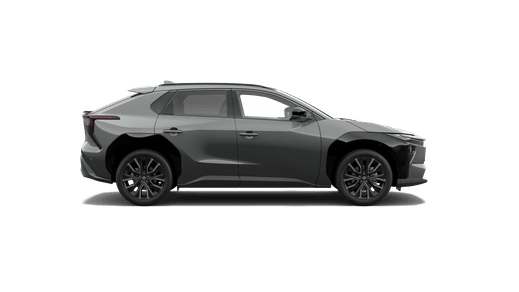
A battery electric Toyota has no petrol engine. It runs on a large battery and one or two electric motors. Toyota's BEVs in Australia are the bZ4X (up to 591km WLTP range from the upgraded 74.7kWh battery) and the new bZ4X Touring flagship (488km, dual-motor AWD, 4.4-second 0-100 km/h). Charging is the only fuel source. Home charging on a wall unit does most of the work, with DC fast-charging on the road for longer trips.
BEV vs PHEV: The Real Differences
This is where most buyers get stuck, because on paper both a PHEV and a BEV can drive on electricity. The differences that actually matter show up in daily use.
Charging is the biggest one. A BEV must be charged to move. A PHEV never has to be plugged in, because the petrol engine is always there as backup. If you have off-street parking and can install a home charger, a BEV is the more efficient long-term option. If you rent, park on the street, or don't want to think about charging infrastructure yet, a PHEV keeps the petrol option open.
Range and long trips work in opposite ways. A BEV like the bZ4X does the whole trip on electricity, then needs a charging stop. A PHEV does the first 100km or so on electricity, then runs like a hybrid for the rest of the drive, adding up to a much longer total range on a tank. For city and suburban driving, a PHEV can often work as an electric car. On a road trip, it works as a hybrid.
Running costs favour the BEV, then the PHEV, then the hybrid. Charging electricity is cheaper per kilometre than petrol, and BEVs skip petrol entirely. PHEVs charge cheaply for short trips and fall back to petrol for longer ones. BEVs can be more expensive up front, and the running-cost advantage only materialises for drivers who actually charge them from home electricity, ideally with solar.
Weight and performance play differently too. The bZ4X Touring's 280kW dual-motor AWD hits 100 km/h in 4.4 seconds. The RAV4 PHEV GR Sport AWD does it in 5.8 seconds with 227kW. Both are quick, but the instant torque of a full BEV feels different to a PHEV's blended power delivery.
Where Hybrid Sits in This Choice
Hybrid (HEV) is what most Toyota buyers in Australia still choose, and there's a clear reason. A Toyota hybrid needs nothing new from you as an owner. You fill it up and service it like any other car, and pocket roughly a 30 to 40 percent fuel saving in typical driving. No plug, no home charger to install, no thinking in kilowatt-hours. For high-mileage drivers who can't easily charge at home, or who want the simplest possible move on from a petrol car, a hybrid is still the sensible answer.
The trade-off is that you're still buying petrol every week. If your commute is short enough that a PHEV would cover it electrically, or if you can charge a BEV at home overnight, you're leaving fuel savings on the table.
The Toyota Electrified Range at Parramatta Toyota
Toyota's electrified lineup is available now at Parramatta Toyota, grouped by type.
- Hybrid (HEV): Yaris Hybrid, Corolla Hatch Hybrid, Corolla Sedan Hybrid, Camry Hybrid, C-HR Hybrid, Yaris Cross Hybrid, Corolla Cross Hybrid, RAV4 Hybrid, Kluger Hybrid.
- Plug-in Hybrid (PHEV): RAV4 Plug-in Hybrid, available in XSE 2WD, XSE AWD and GR Sport AWD. Priced from $58,840 to $66,340 before on-road costs.
- Battery Electric (BEV): bZ4X (FWD from $55,990, AWD from $67,990) and the new bZ4X Touring flagship at $69,990. All before on-road costs.
Which Toyota Is Right for You?
The right choice comes down to how you drive, where you park, and what you're willing to change.
If you drive a lot of kilometres and can't reliably charge at home, a hybrid is the right pick. A Camry Hybrid, RAV4 Hybrid or Kluger Hybrid gives you fuel savings without any change to how you own a car.
If you have off-street parking and want to do most driving on electricity while keeping petrol as backup, the RAV4 PHEV is built for you. Its 100km WLTP electric range covers a typical Sydney weekly commute on electric power alone. Longer trips fall back to hybrid mode, so range anxiety isn't a factor.
If you can charge at home and mostly drive around Sydney and NSW, with occasional interstate trips, the bZ4X range fits. The 591km WLTP range on the FWD model comfortably handles a run to Newcastle, Canberra or the South Coast on a single charge. Fast-charging networks along major highways cover the longer trips.
If you tow, drive long remote distances regularly, or want the top-shelf Toyota SUV experience, the Land Cruiser 300 or 70 Series still make more sense than any electrified option, though Toyota is expanding hybrid tech into these ranges too.
Test Drive Hybrid, PHEV and Electric Toyota at Parramatta Toyota
The best way to decide between BEV, PHEV and hybrid is to drive them back-to-back. At Parramatta Toyota, all three are available in the same visit. A RAV4 Hybrid, RAV4 PHEV and bZ4X can be lined up for a comparison test drive so you can feel the difference in how each one drives, charges and behaves in Sydney traffic. Our team can walk you through the running-cost maths for your specific commute and living setup.
Visit us at the corner of Church and Raymond Street, Parramatta, or call (02) 9204 6444 to book a test drive.
Frequently Asked Questions
What does BEV vs PHEV mean?
BEV stands for battery electric vehicle. It runs entirely on electricity from a battery and has no petrol engine. PHEV stands for plug-in hybrid electric vehicle. It has both a battery you can plug in and a petrol engine, so it can drive on electricity for shorter trips and switch to petrol for longer ones.
Do you need to plug in a Toyota hybrid?
No. A standard Toyota hybrid (HEV) like the Camry Hybrid or Corolla Hybrid never needs to be plugged in. The battery charges itself through the petrol engine and regenerative braking. Only the RAV4 Plug-in Hybrid (PHEV) and the bZ4X (BEV) plug in.
How far can the RAV4 Plug-in Hybrid drive on electric power?
Up to 100km on the WLTP cycle, from the 22.7kWh battery. Real-world electric range depends on driving conditions, load and speed, but this is enough to cover a typical weekday commute in Sydney before the petrol engine takes over.
How long does it take to charge a Toyota bZ4X?
On a 7kW home wall charger, the bZ4X charges from 10 to 100 percent in about 10 hours. On a standard 240V power point, expect around 30 hours for a full charge. The bZ4X Touring supports DC fast-charging up to 150kW, which handles the bulk of a top-up in under an hour on the road.
Which is cheaper to run: a hybrid, PHEV or BEV?
A BEV is cheapest per kilometre if you can charge at home, especially with solar. A PHEV falls between a BEV and a hybrid, cheap for short electric trips and hybrid-efficient on longer ones. A hybrid is cheaper than a petrol-only car but not as cheap as a BEV to fuel. Which one saves you the most depends on how you drive.
Which Toyota SUVs are available as plug-in hybrid or electric?
The RAV4 is available as a plug-in hybrid (PHEV) in XSE and GR Sport grades. The bZ4X and bZ4X Touring are Toyota's fully electric SUVs in Australia. Every other Toyota SUV in the current range (Kluger, Corolla Cross, Yaris Cross, C-HR) is offered as a hybrid.