24 August 2026 · New Vehicles
How Much Does It Cost to Charge an Electric Car in Australia?
Charging an electric car in Australia costs anywhere from around $5 to $50 for a full charge, depending on the car, the electricity tariff, and whether you plug in at home or at a public station. A Toyota bZ4X charged overnight on an EV-specific off-peak plan can top up for under $6. The same bZ4X at a Chargefox ultra-rapid station on a road trip can cost closer to $45. For most EV owners charging mostly at home, running an electric car works out to between 4c and 15c per kilometre. A comparable petrol SUV runs at roughly 15c to 25c per kilometre.
This article breaks down the 2026 numbers for three of the best-selling electric SUVs in Australia: the Toyota bZ4X, Tesla Model Y, and BYD Sealion 7. It covers home charging, off-peak tariffs, and public fast chargers, then shows what each vehicle actually costs to run over a typical year. NSW electricity rates are used throughout as the reference, since they sit close to the national average.
How to Work Out the Cost to Charge an Electric Car
The formula is straightforward. Multiply the battery size (in kWh) by your electricity rate (in dollars per kWh). A 60 kWh battery at 33c per kWh works out to $19.80 for a full charge, before charging losses.
Two numbers shape the real cost, though: the size of the battery you're filling, and how efficiently the car uses that energy. Efficiency is quoted in kWh per 100 km. A car that uses 15 kWh per 100 km on a 33c per kWh tariff costs $4.95 to drive 100 km. A less efficient car using 18 kWh per 100 km costs $5.94 for the same distance. Over 15,000 km a year, that gap adds up.
Two more factors sit on top. AC home charging typically loses about 10% of the energy drawn from the wall to heat and conversion, so a full 74.7 kWh battery may pull closer to 82 kWh from the meter. Public DC fast charging is more efficient at the car end but priced at a premium. And if you have solar, self-consumed energy has an opportunity cost equal to your feed-in tariff (around 5c to 8c per kWh in 2026) rather than your import rate.
2026 Home Charging Costs: bZ4X vs Model Y vs Sealion 7
Here are the headline figures for a full charge on a standard NSW residential flat rate of 33c per kWh. Battery sizes are the manufacturer-quoted figures for 2026 Australian variants. Real-world efficiency draws on published reviews and owner-reported data.
|
Model
|
Battery
|
WLTP range
|
Real efficiency
|
Full charge cost
|
|
Toyota bZ4X 2WD
|
74.7 kWh
|
591 km
|
~15.5 kWh/100km
|
$24.65
|
|
Tesla Model Y RWD
|
62.5 kWh
|
466 km
|
~15.0 kWh/100km
|
$20.63
|
|
BYD Sealion 7 Premium
|
82.6 kWh
|
482 km
|
~18.0 kWh/100km
|
$27.26
|
The Sealion 7 has the largest battery, so it costs the most to fill. That doesn't make it the most expensive to drive though. Cost per kilometre depends on efficiency, not total battery size.
Toyota bZ4X
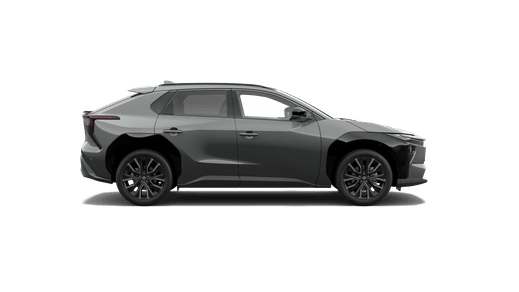
The 2026 bZ4X 2WD carries a 74.7 kWh lithium-ion battery with 591 km of WLTP range. Real-world efficiency sits around 15 to 16 kWh per 100 km, putting the running cost at roughly $5.12 per 100 km on a standard NSW tariff. On an EV Night Boost plan at 7c per kWh, that drops to about $1.09 per 100 km. Toyota Go members buying a new bZ4X also get either a free 7 kW Jet Charge home charger or a 12-month, 625 kWh Chargefox voucher, which offsets early charging costs.
Tesla Model Y
The Model Y RWD uses a 62.5 kWh LFP battery with 466 km of WLTP range. Real-world efficiency of around 15 kWh per 100 km puts running cost at $4.95 per 100 km on flat rate NSW electricity, or roughly $1.05 per 100 km on the cheapest EV plans. The Long Range AWD variant carries a 78.4 kWh NMC battery and matches the bZ4X for capacity, though at a higher purchase price. Its shorter WLTP range means more frequent public charging stops on longer trips than the bZ4X.
BYD Sealion 7
The Sealion 7 Premium runs an 82.6 kWh LFP Blade battery. It has more capacity than either rival but is the least efficient of the three, with real-world consumption of around 18 kWh per 100 km on the Premium and 21 kWh per 100 km or more on the Performance AWD. That works out to about $5.94 per 100 km on a NSW flat rate for the Premium. The Sealion 7 supports 11 kW AC charging, so three-phase home wallboxes can fill it faster than earlier BYD models.
Which Electricity Tariff You're On Changes Everything
Your electricity plan matters more to your running costs than the car you drive. The gap between a standard flat rate and an EV-specific overnight plan is bigger than the gap between any two vehicles in this comparison.
NSW households on a standard single rate tariff pay around 33c per kWh in 2026, following the AER's DMO 8 reset in July. Time-of-use tariffs shift that between peak (around 45c to 50c), shoulder (around 25c), and off-peak (around 20c to 25c between 10pm and 7am). Dedicated EV plans go further. EnergyAustralia's EV Night Boost offers 7c per kWh between midnight and 6am for Ausgrid customers. OVO Energy's EV Plan sits at 4.5c per kWh overnight. Both require a smart meter.
Here's how a full charge on each of the three EVs compares across four common tariff scenarios:
|
Tariff
|
Toyota bZ4X (74.7 kWh)
|
Tesla Model Y RWD (62.5 kWh)
|
BYD Sealion 7 (82.6 kWh)
|
|
Peak (45c/kWh)
|
$33.62
|
$28.13
|
$37.17
|
|
NSW flat rate (33c/kWh)
|
$24.65
|
$20.63
|
$27.26
|
|
Off-peak TOU (22c/kWh)
|
$16.43
|
$13.75
|
$18.17
|
|
EV Night Boost (7c/kWh)
|
$5.23
|
$4.38
|
$5.78
|
|
Self-consumed solar (~0c/kWh)
|
Effectively free
|
Effectively free
|
Effectively free
|
If you drive 15,000 km a year, moving from peak grid rates to an EV Night Boost plan saves around $1,300 to $1,600 depending on the car. That's a bigger single-year saving than the difference between any two of the three vehicles here.
Solar owners get the strongest deal. Every kWh sent to the car from your own panels is a kWh you weren't going to be paid much for anyway (feed-in tariffs in NSW sit around 5c to 8c per kWh in 2026). Daytime charging from a home 6.6 kW system covers most of a typical week's driving in any of these three EVs for the cost of the small feed-in tariff you forgo.
How Much Does Public Charging Cost?
Public DC fast charging costs more than home electricity, but it's the only realistic option for road trips. Rates vary by network, charger speed, and time of day. Here's where the major Australian networks sit in mid-2026.
|
Network
|
Typical rate (per kWh)
|
Full charge on Model Y RWD
|
Full charge on bZ4X
|
|
Chargefox (50 kW)
|
40c to 50c
|
$25 to $31
|
$30 to $37
|
|
Chargefox (ultra-rapid)
|
55c to 79c
|
$34 to $49
|
$41 to $59
|
|
Tesla Supercharger (Tesla owner)
|
45c to 55c
|
$28 to $34
|
Not applicable
|
|
Tesla Supercharger (non-Tesla)
|
55c to 65c or $9.99/mo membership
|
Not applicable
|
$41 to $49
|
|
Evie Networks
|
45c to 75c
|
$28 to $47
|
$34 to $56
|
|
NRMA fast/ultra-fast
|
54c to 59c
|
$34 to $37
|
$40 to $44
|
|
AmpCharge (Ampol)
|
60c to 69c
|
$38 to $43
|
$45 to $52
|
|
Jolt
|
First 7 kWh free daily, then variable
|
Free top-up (about 40 km)
|
Free top-up (about 40 km)
|
For daily driving, public charging rarely makes financial sense. The gap between charging at home overnight (7c to 22c per kWh) and charging at a public ultra-rapid station (60c per kWh and up) works out to roughly $8 to $10 extra per 100 km. Public DC is best treated as a road-trip tool, not a routine one.
Apartment residents and renters who can't install a home charger still typically come out ahead versus petrol, even without off-peak home rates to fall back on. At 65c per kWh, a bZ4X costs about $10 per 100 km versus around $18 per 100 km for a petrol equivalent.
EV Charging vs Petrol: The Real Annual Cost
For a first-time EV buyer, the comparison worth doing is any of these three against a petrol SUV of similar size. Here's the annual fuel or charging cost for a driver covering 15,000 km a year.
|
Vehicle
|
Consumption
|
Annual cost (flat rate 33c/kWh or petrol $1.85/L)
|
|
Toyota bZ4X 2WD (home, flat rate)
|
15.5 kWh/100km
|
$767
|
|
Toyota bZ4X 2WD (EV Night Boost)
|
15.5 kWh/100km
|
$163
|
|
Tesla Model Y RWD (home, flat rate)
|
15.0 kWh/100km
|
$743
|
|
BYD Sealion 7 Premium (home, flat rate)
|
18.0 kWh/100km
|
$891
|
|
Toyota RAV4 Hybrid (petrol)
|
4.8 L/100km
|
$1,332
|
|
Toyota RAV4 petrol
|
7.8 L/100km
|
$2,165
|
Even against the RAV4 Hybrid, one of the most fuel-efficient petrol SUVs on sale, the bZ4X on a flat-rate NSW tariff saves about $560 a year. Against a petrol RAV4, that jumps to $1,400 a year. Move to an EV Night Boost plan and the bZ4X saves close to $2,000 a year on fuel alone, before factoring in lower service and maintenance costs.
How the Three EVs Compare on Running Costs
All three sit within a few cents per kilometre of each other on a NSW flat rate. The Toyota bZ4X 2WD runs at $5.12 per 100 km, the Tesla Model Y RWD at $4.95, and the BYD Sealion 7 Premium at $5.94. Over 15,000 km a year, the gap between the bZ4X and Model Y works out to around $24. That's less than a single tank of petrol.
Where the bZ4X pulls ahead is on real-world usability. Its 591 km WLTP range is the longest of the three, which means fewer public charging stops on longer trips where cost per kilometre spikes. Toyota Go members buying a new bZ4X also get either a free 7 kW Jet Charge home charger or a 12-month, 625 kWh Chargefox voucher, effectively covering the first year of home charging costs.
The BYD Sealion 7 Premium sits at the back on cost per kilometre because of its higher real-world consumption of 18 kWh per 100 km. The Performance AWD variant is thirstier again at around 21 kWh per 100 km.
Charging cost differences between these three are small enough that they shouldn't swing the decision. What will swing it is whether you can charge at home, whether you're on the right electricity plan, and what extras come with the car when you drive it away.
Frequently Asked Questions
Is it cheaper to charge an EV or fill up a petrol car?
Charging an EV at home is cheaper than filling up a petrol car in every Australian state. A Toyota bZ4X on a NSW flat tariff runs at about $5 per 100 km. A comparable petrol SUV runs at $15 to $20 per 100 km depending on efficiency and fuel prices. Over a year of 15,000 km, that's a saving of $1,400 to $1,600 on fuel alone. On an EV Night Boost plan the saving grows to closer to $2,000.
Can you charge an EV from a normal powerpoint?
Yes, but slowly. A standard 240V, 10-amp powerpoint delivers about 2.0 to 2.3 kW, adding roughly 12 to 15 km of range per hour. A full charge of a 74.7 kWh bZ4X on a household powerpoint takes around 30 hours. It's fine as a backup and it works well for topping up small amounts overnight, but most owners install a 7 kW single-phase or 22 kW three-phase wallbox to cut the time to under 10 hours for a full charge.
How much does a home EV charger cost to install?
A 7 kW single-phase wallbox typically costs $1,500 to $3,000 fully installed by a licensed electrician. A 22 kW three-phase unit costs $2,500 to $4,500 installed and requires a three-phase supply to your home. Toyota Go members who buy a new bZ4X can choose a free 7 kW Jet Charge unit as part of the current offer, though installation is separate.
Are public EV charging stations free in Australia?
A small number are. Jolt offers 7 kWh of free DC charging per day at its network, which adds about 40 to 45 km of range. Tesla Destination Chargers at hotels and shopping centres are often free for guests. Some council-run chargers in Sydney, Melbourne, and Brisbane are still free. Most public DC fast chargers, though (Chargefox, Evie, NRMA, Tesla Superchargers, AmpCharge) are paid, at rates between 40c and 79c per kWh.
How long does it take to charge an EV?
It depends on the charger. On a home 7 kW wallbox, a bZ4X takes about 10.5 hours to charge from empty. On a home 22 kW three-phase wallbox, that drops to 3.5 hours. At a 150 kW DC fast charger, the bZ4X can go from 10% to 80% in about 35 minutes. The Tesla Model Y at a 250 kW V3 Supercharger does the same 10% to 80% in around 25 minutes. The BYD Sealion 7 Premium takes about 32 minutes on a 150 kW DC unit.
Test Drive the Toyota bZ4X at Parramatta Toyota
The 2026 Toyota bZ4X is on the showroom floor at Parramatta Toyota, from $55,990 plus on-road costs for the 2WD. Book a test drive to see how it drives and how it fits your daily commute. Our team can walk you through home charging setup, current Toyota Go offers, and how the bZ4X compares to the RAV4 Hybrid if you're still weighing electric against hybrid. Call (02) 9204 6444 or visit us at the corner of Church and Raymond Street, Parramatta.